Skeuomorphism
It's just a fun word to say. For those who haven't read the countless articles trashing Apple's design department, skeuomorphism is a physical ornament or design on an object made to resemble another material or technique.
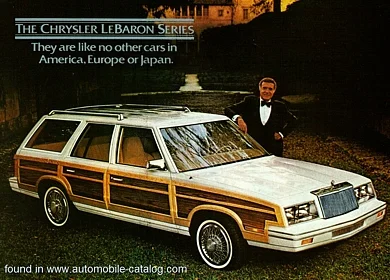
It's just a fun word to say. For those who haven't read the countless articles trashing Apple's design department, skeuomorphism is a physical ornament or design on an object made to resemble another material or technique. Think about the trash can that lives in the Mac OS dock. Think about the wood paneling on the 1986 Chysler LeBaron station wagon. Skeuomorphism has been around since the 1890s.
We needed Skeuomorphism
When Apple created the very first GUI, (ok, they borrowed it from IBM, but that's another story) they needed a way to help users understand the interaction model. How do you make sense of a completely digital environment? You mimic elements from the real world. A paper icon for a digital document. File folders for holding those documents. A trash can for getting rid of those documents. etc...
My father was a control operator at a Dupont plant in California. He turned physical valves and read physical dials to control the plant. Once the controls went digital, it made sense to use digital skeuomorphs to give the operators instant familiarity with the interface.
Windows 8 and a much flatter world
Fast forward to the launch of Windows 8 and the end of all things skeuomorphic (sorry. I just love that word.) Microsoft flattened out our digital world based on a simple premise, that the average consumer was now so familiar with digital interfaces, we no longer had to have the visual cues that skeuomorphism provided. We could drop the fake wood and felt of IOS 6, and flatten our interfaces and make them more adaptable to responsive design. And this is where the debates live. Is flatter better? Is Skeomorphism evil?
Consider the end user
As with all design, the question shouldn't be about style, it should be about the end user. Is your target customer very familiar with digital interfaces and multi touch gestures? Then you can probably ditch the overly obvious designs and take advantage of the new interface styles constantly evolving. Is your target still new to the digital world (like my father) and needs a familiar interface to help them be successful? Then a form of skeuomorphism is probably right for you.
I know this may be over simplistic, but I have read too many articles arguing the merits of one over the other, and in most of them, the end user is not considered. While there are aspects of IOS 7 I like, I think Apple went too far in the other direction just to be different. I think they actually made some items harder to use because they abandoned imagery and interaction models they had successfully trained millions of customers on.
Influence, and how to get it
We would all like to be seen as trusted, valued partners in our jobs. But the reality is sometimes you have to earn the right to do your job. Frustrating, I know, but true. In lieu of instant, unlimited trust and confidence from our “customers,” here are a few things we can all do to change the conversation, align perceptions, and gain/exert influence in our current and future roles.
We would all like to be seen as trusted, valued partners in our jobs. But the reality is sometimes you have to earn the right to do your job. Frustrating, I know, but true. In lieu of instant, unlimited trust and confidence from our “customers,” here are a few things we can all do to change the conversation, align perceptions, and gain/exert influence in our current and future roles.
Solve the Problem
It’s happened to all of us. The client comes to the first meeting either with a mental idea or a physical artifact of what they want. What they have done is solved their own problem, and are looking for someone, namely us, to execute their solution. At this point, we have a couple of choices: we can either execute their solution and lose an opportunity to truly be problem solvers and trusted advisors, or we can change the conversation and show the value that we can bring.
Understand the Problem
The first step in solving the problem, is, well, to get an understanding of what the problem actually is. This is often the hardest thing to do as the client probably doesn’t understand their real problem either, and it was easier for them jump right to a “solution.” One of our biggest challenges here at NI is lack of clear strategy and problem statements, and helping your client uncover their real marketing problem serves not only us, but also the entire organization.
One of the biggest challenges in problem definition is agreement of the problem statement. I think this alone is the biggest cause of project rework and strategy disconnect.
Help them narrow down the problem statement to the context of the project at hand. We can’t solve all of the problems with one ad, so what is the ONE thing we are trying to address and why? Don’t underestimate the power of understanding the why.
Striving to understand the problem by asking Smart Questions will take us a long way toward becoming a trusted advisor and giving us the influence and the knowledge we need to truly help solve the right problems.